Bitcoin ·
10% Bitcoin loss Friday, crypto rebounds amid NVDA selloff
Nvidia finished Friday at $125.53, a decline of 47.5% from its October peak, representing a loss of approximately $2.7 trillion in market value over seven weeks.
The Nasdaq experienced a 10% drop throughout the past week, which is its steepest decline since 2020, wiping out the entire gain for 2026 and shedding around $8.7 trillion since October 6.
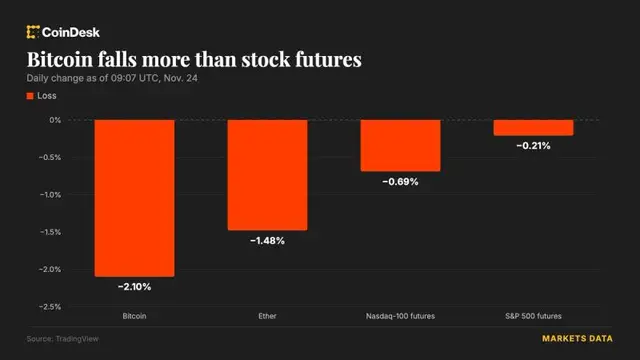
Bitcoin fell by 10% in a single day on Friday amidst a series of falling prices, although a recovery rally is presently occurring.
The S&P and Dow both ended in a correction, and AMD saw a 20.5% decrease, while CoreWeave is now trading below the price at which it went public.
Bank of America’s fund manager survey indicated that investors were reducing their investment in technology the most since 2006, with 52% of respondents anticipating that at least one major hyperscaler will announce a reduction in capital expenditure within six months.
Polymarket traders assigned a 54% probability that the AI bubble will burst in 2026.
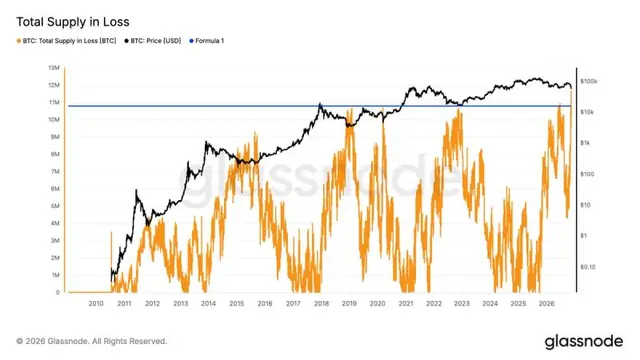
Crypto followed this trend downward. Bitcoin reached approximately $55,100 on Friday evening, marking a new cycle low and the lowest point since 2024, which is 56% below its high from last October.
Fear and Greed registered a 9, and ETFs lost $1.79 billion over the week. This trend is now moving toward two consecutive years of declines, an unprecedented occurrence.
However, a rebound happened over the weekend. Bitcoin recovered to $60,000 and is currently trading above $61,000 this morning; ETH is back above $1,710, and even Anthropic, which dropped 9% on Friday, is quoting near $90 on Hyperliquid’s perpetual contracts, remaining above its $83 offer.
Two possible explanations emerged during the weekend. U.S. President Donald Trump stated on Sunday that the market has fallen $6 trillion since the Democrats’ “rather strange” victory on November 3, asserting that the Nasdaq is down 20% and that this is “100% due to” Democratic policy.
Elon Musk offered a more relevant perspective. He cautioned on Saturday that the lack of available cash in the coming year will be “going to be nuts,” because a delay of even a few months between paying for computing power and earning revenue from it translates into hundreds of billions in additional working capital requirements.
This raises the question of where this necessary funding will originate. This constitutes a funding challenge rather than a valuation issue, and this point carries more weight coming from him.
SpaceX reportedly sold $32 billion worth of bonds last week to acquire Nvidia chips, suggesting he is describing a constraint he is already financing through borrowing.
Regarding the outlook, the Fed is scheduled to convene on December 8th and 9th, with the market currently anticipating an interest rate increase amidst all these developments.
Gas prices recently hit a low point for eight months ahead of Thanksgiving, declining by roughly 15% in one month, which should alleviate some pressure on the headline inflation report.
The complication remains that pump prices are still running 18% higher than last year, and the core CPI figure, which Waller specifically referenced when suggesting fifty basis points, excludes energy costs entirely.
Any easing of pressure must stem from cooling in the shelter and services sectors instead. It is possible the Fed might offer some relief.
Whether this relief will be sufficient to halt the downward trend remains to be seen.
Why it matters
The market volatility, driven partly by Nvidia's decline, shows significant investor uncertainty across tech and crypto. Readers should watch the upcoming Fed meeting on December 8th and 9th for signals on potential interest rate changes that could impact market stability.
Reported by Decrypt.