DeFi · · 2 outlets
66 of 130 wallets on Trump dinner list got tokens from non-US exchanges
The concentration of tokens among the top holders is another noteworthy aspect. The top 10 wallets registered on the leaderboard possess 81% of the total tokens.
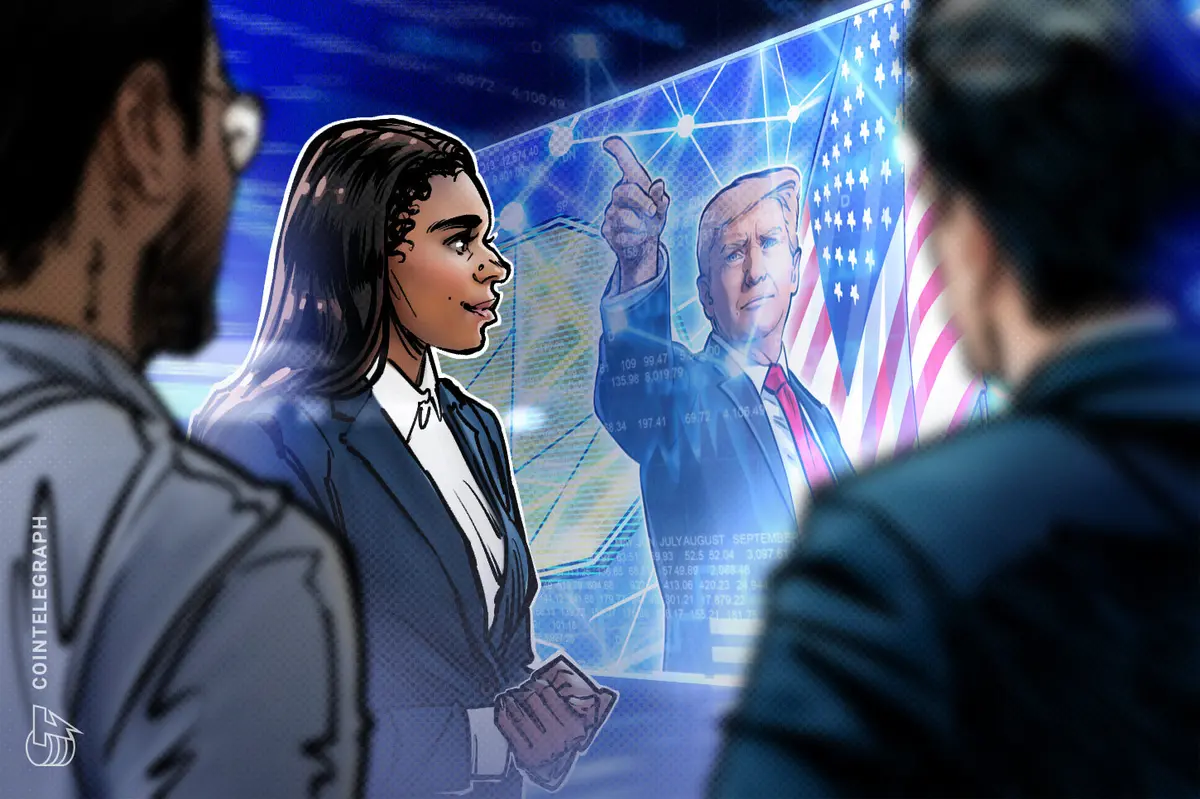
Consumer advocacy group Public Citizen's analysis reveals that 66 out of 130 wallets that met the criteria for the event originated from exchanges that prohibit U.S. customers, suggesting an international composition for the attendees of Trump's memecoin dinner scheduled for Sunday.
This finding stems from an examination conducted by Public Citizen. Specifically, when examining the contest leaderboard, Public Citizen identified at least 66 of the 130 qualifying wallets as being linked to exchanges that restrict American users, which constitutes 51% of the group. The exchanges most frequently mentioned in this context were Binance, Bybit, and BloFin.
The gathering is slated to occur at the Trump National Golf Club in Sterling, Virginia. The contest is designed to reward the top 185 holders of the TRUMP token, although only 130 of these participants are visible on the public leaderboard, indicating that a portion of the seating arrangement remains private.
Public Citizen released its analysis on November 22, 2026, using data captured as of the November 16 cutoff. At that specific time, the 66 wallets connected to offshore platforms collectively held 4.35 million TRUMP tokens, valued at approximately $4 million. These particular wallets accounted for 44% of all tokens present on the leaderboard. Therefore, nearly half of the eligible wallets, and close to half of the eligible tokens, are traceable to platforms not authorized to serve Americans.
The identities of those attending have not been made public, which is significant because concerns regarding foreign involvement in the contest have been escalating, particularly considering the substantial funds that have been channeled to entities associated with Trump.
A key limitation to this data is that while on-chain information can show the origin of tokens, it cannot independently verify the nationality of the individual controlling the wallet.
The total value of qualifying holdings has decreased by 94%, settling at roughly $8.6 million, when compared to May 2025. In May 2025, the top 220 wallets were estimated to command nearly $148 million in total assets. This difference is largely attributable to the token's price, which has dropped from trading above $70 to currently hovering around $0.92 to $0.93.
The TRUMP token itself was launched in January 2025, shortly preceding Trump's second inauguration. This situation is not unprecedented; previous TRUMP holder contests have shown similar patterns wherein participants acquired tokens via exchanges situated outside the United States. The initial dinner in May 2025 garnered considerable attention specifically because it granted access to the president in exchange for holding the token. Critics contended that this arrangement created an opening for international buyers seeking closeness to American political influence.
Binance, Bybit, and BloFin all operate outside the regulatory boundaries of the U.S. for retail trading. The data on concentration introduces an added element of risk; when the top 10 wallets control 81% of the leaderboard tokens, a small number of major holders effectively dictate the contest's outcome. The combination of undisclosed attendees, funding trails originating offshore, and the flow of proceeds to Trump-affiliated entities creates a situation that invites scrutiny regarding potential conflicts of interest. Public Citizen's analysis provides critics with a tangible, on-chain dataset upon which to base their criticisms.
Why it matters
This finding raises questions about the international nature of attendees at Trump's memecoin dinner. The reliance on non-US exchanges suggests potential foreign involvement in the contest. This situation adds to growing scrutiny regarding foreign participation in the event.
Earlier coverage
Reported by CoinTelegraph and Crypto Briefing.