bitcoin ·
Bitcoin has soared 50% on average after midterms. The S&P 500 has gained 15%.
Bitcoin has risen by an average of 50% following midterms. The S&P 500 has seen a gain of 15%.
Historically, both Bitcoin and the S&P 500 have achieved positive returns in the year subsequent to midterm elections. However, the pattern for BTC might also be attributable to the four-year halving cycles.
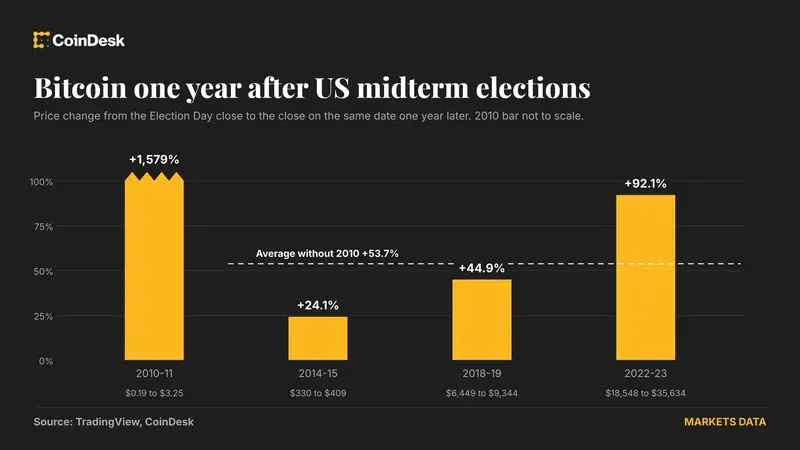
Excluding 2010, Bitcoin gained an average of 53.7% over the 12 months following the last three U.S. midterm elections. The S&P 500 has increased by an average of 15.17 percent in the year after midterms since 1950, which is more than double its average gain in other years.
A Democratic takeover of at least one Congressional chamber could heighten disagreements concerning federal debt, defense spending, and President Donald Trump’s crypto associations, although markets have largely accounted for a divided government. If history is a guide, both Wall Street and crypto could experience a strong period after the Nov. 3 U.S. midterm elections.
Since its 2009 debut, Bitcoin (BTC, valued at $84,459.46) has undergone four midterms. CoinDesk data shows that in the three subsequent midterms, prices rose an average of 53.7% in the 12 months after Election Day. These returns measure the percentage increase from the daily close (00:00 UTC) on Election Day to the close one year later.
The 2010 midterm saw a 1,579% surge for Bitcoin, but that figure is deemed unreliable due to the market's small and fringe nature at the time. If this pattern repeats, Bitcoin's recent quiet trading around $80,000 could precede another upward movement after November 3. BTC has already risen over 35% since dropping below $60,000 in June.
Some analysts suggest that buying and holding crypto is opportune now, anticipating a new bull run. Nevertheless, the historical data is limited, and the post-midterm BTC surges might stem more from the four-year cycle than from U.S. political events.
Bitcoin operates in cycles of approximately four years, tied to the mining reward halving. This inbuilt Bitcoin blockchain code reduces the BTC given to miners per block by 50% every four years. Following each of the four halvings to date, BTC rallied sharply, peaked 12 to 18 months later, and then entered a bear market. These bear markets occurred in midterm years: 2014, 2018, 2022, and currently 2026. Thus, the rebound after midterms might represent the beginning of a new cycle rather than political influence.
The S&P 500 offers a longer track record and indicates a positive trend, which is favorable for Bitcoin and other risk assets. Hartford Funds reports that the index has averaged a 15.17% gain in the year after midterms, compared to 7.30% in all other years since 1950.
Should Democrats secure one or both Congressional chambers in the 2026 elections, debates over the record federal debt could intensify, given the ongoing unresolved debt limit issue. Furthermore, Brookings notes that Trump’s proposal for $350 billion in mandatory defense funding might face obstacles. Democrats could utilize legislative barriers to halt funding for Middle East escalations. Democratic committee chairs could also investigate conflicts of interest related to Trump’s personal crypto profits.
Reported by CoinDesk.