Bitcoin · · 2 outlets
$12M crypto hack confirmed, Chainflip offers attacker 10% bounty by Nov 23
Chainflip has confirmed a theft amounting to roughly $12 million, involving Bitcoin, Ether, and stablecoins, which occurred from its cross-chain vaults on November 21.

The company has offered the perpetrator a 10% bounty, contingent upon the return of 90% of the misappropriated assets by 18:38 UTC on November 23. Should the attacker adhere to these terms, Chainflip stated it would regard the return as a white-hat recovery and withdraw all complaints lodged with law enforcement agencies.
Chainflip Labs issued a public notification to the attacker, detailing the losses as 122.86137042 BTC, 520.2243399 ETH, 3,249,631.41 USDC, and 758,141.33 USDT. This updated financial assessment incorporates the Bitcoin taken from the protocol and represents a significantly larger figure compared to the initial $4.86 million reported from its Ethereum vault. The protocol's infrastructure facilitates asset exchanges across various blockchains, such as Bitcoin and Ethereum, allowing users to bypass traditional centralized exchanges without moving their funds.
The company communicated to the attacker, "Keep 10% as a bounty and return 90%." The repayment instructions mandate the transfer of 110.57523337 BTC and 2,618.1 ETH to two specific wallet addresses. Despite the stolen assets including USDC and USDT, the recovery requirements specifically request payments in Bitcoin and Ether rather than separate stablecoin transfers. If both specified payments are received before the deadline, Chainflip assured that it would not inquire further, would acknowledge the return as a white-hat recovery, and would withdraw its official reports and complaints filed with law enforcement. The attacker was invited to establish contact via an on-chain message sent to either of the designated repayment addresses.
Chainflip's investigation traced the preparatory actions for the breach back to Tornado Cash funding on November 11, followed by a purchase of FLIP tokens and the registration of a validator account on November 20. The entity identified a server linked to the operation and reported having acquired intelligence regarding the validator and the web services utilized during the incident. "We have identified the mechanism of key exposure," Chainflip asserted, further noting that countermeasures have been put in place to prevent the recurrence of this particular attack methodology.
Onchain Lens, a blockchain tracker, noted in its November 21 assessment that the Ethereum withdrawals possessed a valid signature from the vault's aggregate signing key, leading the tracker to suggest the possibility of a compromised key, although it did not specify how the attacker obtained the signature. Separately, the blockchain analytics firm AMLBot reported that the stolen USDC and USDT were converted into Ether via Uniswap within four minutes following the withdrawal, with the majority of these resulting funds subsequently moving into Tornado Cash. Onchain Lens tracked approximately 2,909 ETH, which held a value near $4.75 million at that time, into transactions involving the cryptocurrency mixer; these transfers represented movements of assets already counted within the original Ethereum vault losses, not additional withdrawals.
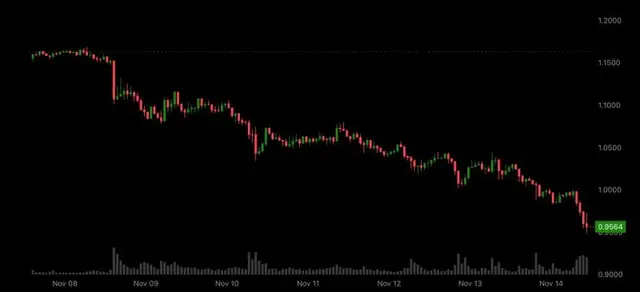
The larger $12 million valuation disclosed by Chainflip subsequently accounts for the stolen Bitcoin. It was noted that addresses connected to the perpetrator had been flagged by major blockchain analytics providers, and Chainflip maintained that data gathered during its inquiry could aid law enforcement in identifying the attacker. Following the event, Chainflip's native FLIP token experienced substantial selling pressure, with CoinGecko documenting a decline of approximately 43% during the initial market reaction on November 22. Market data from CoinGecko showed that FLIP traded near $0.33 subsequently, after dropping to around $0.23 over the preceding 24 hours. The circulating supply was near 86 million tokens, resulting in a market capitalization of roughly $28 million. FLIP functions as the reward and staking token for the network validators within the protocol. According to Chainflip's token economics, a portion of the fees generated from cross-chain swaps is allocated to the purchase and burning of FLIP.
Previously, as reported by crypto.news, the initial losses within the Ethereum vault were estimated at $4.86 million. Before the company's later disclosure expanded the total, investigators had identified approximately $3.25 million in USDC, $758,000 in USDT, and 520 ETH. This latest security event follows a distinct incident in September involving Chainflip's Tron USDT integration. On September 12, an attacker exploited the transaction memo handling feature to secure multiple payouts against the same underlying transactions, leading to six unauthorized withdrawals that totaled 736,442.17 USDT. Chainflip temporarily halted its operations while developers investigated the vulnerability and prepared an update to prevent further payouts. The recovery plan, outlined on September 15, included network upgrades and modifications to the balances of affected liquidity providers before services could resume. Validators later approved a proposal to cover the deficit by utilizing surplus USDC and remaining Tron funds held by the protocol, with Chainflip's September 18 accounting placing the total amount covered by that reimbursement proposal at $748,935.16.
Why it matters
This incident highlights ongoing security vulnerabilities in cross-chain DeFi protocols, where large sums of digital assets are at risk. Investors should watch how Chainflip addresses this breach and what measures are put in place to prevent future key exposure.
Earlier coverage
Reported by CoinTelegraph and crypto.news.