Bitcoin · · 2 outlets
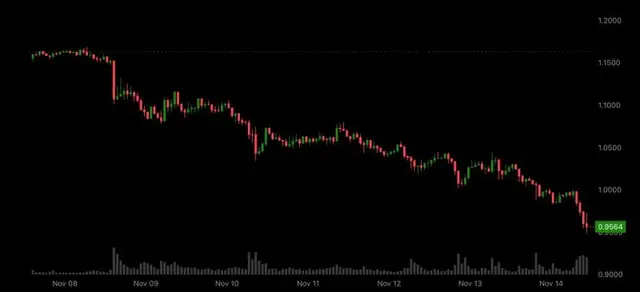
62000 Bitcoin dip, recovers to $65000 after July low
On November 16, the cryptocurrency market remained under duress, with Bitcoin trading beneath $65,000 following a brief rebound from its weekend dip that had pushed prices near $62,000.

At the time of writing, data from crypto.news showed Bitcoin trading at $64,798.76, representing a 0.3% decrease over the preceding 24 hours. The digital asset has seen losses of 13.5% across the last seven days, 20% over the last month, and 32.1% year-to-date. During the prior trading session, Bitcoin briefly approached $66,000, but buyers struggled to sustain that upward movement; subsequently, it traded mostly between $64,500 and $65,500, with repeated upward attempts encountering selling pressure.
This latest downturn follows another challenging weekend for digital assets, during which approximately $2 billion in leveraged positions were liquidated, and the Crypto Fear and Greed Index fell to 10, signifying extreme investor apprehension. According to KuCoin's market assessment, a recovery might begin later in November if Bitcoin manages to hold above $62,000 and successfully regain the $67,000 to $70,000 range. Michaël van de Poppe, a crypto analyst, suggested Bitcoin might be nearing a short-term bounce following the heavy selling over the weekend, noting in a November 15 X post that "This is the start of a potential bounce and this is exactly what you'd want to see on #Bitcoin," referencing unusually high trading volumes and signs that buyers were absorbing selling pressure during the quieter trading hours of the weekend.
During its decline, Bitcoin already shed several significant technical levels. As crypto.news previously stated, the cryptocurrency dropped below its 200-week moving average near $67,992 on November 14, and its daily relative strength index reached 22.96, an indicator pointing toward deeply oversold conditions that can sometimes precede a short-term upturn after extended selling. Nevertheless, to establish a more convincing reversal, Bitcoin must still surpass its prior support levels.
Meanwhile, Doctor Profit, another crypto analyst, has maintained a long-term bullish stance despite the recent correction, designating $57,000 as a possible bottom for a bear market. Although the analyst had previously identified $68,000 as Bitcoin's low on November 13, the cryptocurrency subsequently fell below that marker during the weekend selloff. In a November 15 X post, Doctor Profit asserted that $57,000 remains his target for a bear-market floor, adding that sellers could only claim success if Bitcoin breached that price point. On the downside, KuCoin identified the $62,000 to $63,000 area as the immediate support zone; a sustained breach below this region could expose Bitcoin to further losses heading toward $60,000, with another potential support area situated between $57,000 and $58,000.
Institutional interest remains subdued even after Bitcoin's latest recovery, as US-listed spot cryptocurrency ETFs continue to see considerable withdrawals. Farside Investors reported that spot Bitcoin ETFs experienced net outflows totaling $185.4 million on November 13, extending their losing streak to seven consecutive trading sessions. BlackRock's IBIT was responsible for $143.5 million of Friday's withdrawals, while Fidelity's FBTC saw another $41.9 million depart. During the trading week spanning November 9 through November 13, total withdrawals across Bitcoin funds amounted to roughly $1.07 billion. This selling pressure extended beyond Bitcoin, with US-listed crypto ETFs losing $1.53 billion over that same timeframe, which included $398.9 million from Ethereum funds and $32 million from Solana products. A return to consistent ETF inflows would furnish a more robust basis for recovery, particularly following several weeks of institutional withdrawals.
The Federal Reserve's monetary policy meeting in December constitutes another key event for crypto investors, especially after stronger consumer inflation data heightened expectations for further interest rate hikes. Market analyst Fawad Razaqzada at StoneX noted that in October, the US consumer price index increased by 0.4% month-over-month, surpassing projections of 0.3%, while core inflation rose 0.3% against expectations of 0.2%. Higher yields on Treasuries and elevated borrowing costs have diminished appetite for riskier assets, including cryptocurrencies, as investors reevaluate the monetary policy outlook.
Friday's less severe producer inflation report briefly enabled Bitcoin to climb toward $70,000 after US producer prices rose by 0.3% in October, which was below the anticipated 0.4%. Pav Hundal, an analyst at Swyftx, commented that weaker inflation might alleviate pressure on the dollar and offer some backing for Bitcoin, although annual producer inflation remained high at 6.5%. Investors can monitor evolving expectations for the December decision using the CME FedWatch tool, which quantifies market-implied probabilities for Federal Reserve rate choices.
Bitcoin's price movement, which saw it dip below $62,000 for the first time since July before recovering to approximately $65,000, was reported first by Crypto Briefing. This volatility underscores ongoing market uncertainty, which affects both investor confidence and liquidity, carrying wider consequences for the acceptance of crypto.
In addition to Bitcoin, Ether and XRP also reached multi-month lows as stablecoin supply diminished and ETF outflows stretched to seven days. On November 15, the combined circulating value of USDT and USDC dropped to $244.8 billion, according to DefiLlama data, marking the lowest point since September 2025 and representing a $11.7 billion reduction over the prior 30 days. This figure is significantly lower than the 2026 peak of $268.2 billion, which occurred on May 8. Since stablecoins serve as the main funding currency for crypto trading, a reduction in their supply translates to less available capital held aside to absorb selling or fuel new purchases. Coinbase Institutional has attributed Bitcoin's recent decline primarily to shifting Federal Reserve rate expectations, rather than isolated incidents such as the Binance hack. Changpeng Zhao, a co-founder of Binance, refuted claims that Binance sold crypto during this downturn. As the market watches, traders are observing whether Bitcoin will test its 2026 low of $57,718, which is about 11% beneath Sunday's level, and whether the ETF outflows will persist when US markets resume trading on Monday. Prices cited are from Coinbase unless otherwise indicated.
Why it matters
This volatility underscores ongoing market instability, which directly affects investor confidence and liquidity within the crypto space. Readers should watch if Bitcoin can hold above $62,000 or if ETF outflows continue as US markets reopen Monday.
Earlier coverage
Reported by Crypto Briefing and crypto.news.